






Category: Dental
How Dental Meridians Connect Your Teeth to Broader Health Pathways

Understanding the Ancient Wisdom of Dental Meridians
The concept of dental meridians represents a fascinating intersection between traditional Eastern medicine and modern dentistry. This holistic approach suggests that each tooth corresponds to specific organs, glands, and systems throughout the body, creating an intricate web of connections that extends far beyond the mouth. Whilst conventional Western dentistry has long focused on treating teeth in isolation, the meridian theory offers a broader perspective that considers oral health as an integral component of overall wellbeing.
Traditional Chinese Medicine has recognised these connections for thousands of years, mapping energy pathways that flow through the body. Within this framework, teeth are not merely standalone structures but rather vital points along meridian lines that influence various physiological systems. When a tooth experiences decay, infection, or trauma, practitioners of meridian dentistry believe these issues may manifest as symptoms elsewhere in the body, potentially affecting everything from joint function to digestive health.
The Meridian Tooth Chart and Its Significance
At the heart of meridian dentistry lies the meridian tooth chart that maps dental connections to organs, which illustrates the specific relationships between individual teeth and corresponding body systems. This chart divides the mouth into sections, with each tooth linked to particular organs and vertebrae. For instance, the upper and lower incisors connect to the kidneys and bladder, whilst the canines relate to the liver and gallbladder.
Understanding these connections enables dental professionals to consider the wider implications of oral health issues. A persistent problem with a particular tooth might prompt investigation into the health of its corresponding organ system. Similarly, chronic conditions affecting certain organs could potentially manifest as dental problems in their associated teeth. This bidirectional relationship underscores the importance of recognising oral health’s connection to systemic wellness.
How Meridian Theory Influences Modern Dental Practice
Progressive dental practitioners increasingly acknowledge the merit in considering these holistic connections when treating patients. A dentist St Albans residents visit may incorporate aspects of this philosophy alongside conventional treatments, recognising that optimal oral health contributes to overall physical wellbeing.
The Scientific Perspective on Tooth-Body Connections
Whilst the meridian concept originates from ancient tradition, modern research continues to explore the legitimate connections between oral health and systemic conditions. Scientific studies have demonstrated clear links between periodontal disease and cardiovascular problems, diabetes, and inflammatory conditions throughout the body. The bacteria present in infected teeth can enter the bloodstream, potentially affecting distant organs and tissues in ways that align surprisingly well with traditional meridian mappings.
Inflammation serves as a particularly important factor in understanding these connections. Chronic dental infections create persistent inflammatory responses that do not remain localised to the mouth. Instead, inflammatory markers circulate throughout the body, potentially exacerbating existing health conditions or contributing to new ones. This physiological reality provides a scientific foundation for understanding why dental health matters beyond achieving an attractive smile.
Practical Applications for Patients
For individuals seeking to optimise their health, understanding dental meridians offers valuable insights into preventative care. Regular dental examinations become even more crucial when viewed through this holistic lens, as they represent opportunities to identify potential issues before they affect broader health pathways. Maintaining excellent oral hygiene, addressing dental problems promptly, and choosing biocompatible materials for dental work all take on added significance.
Those experiencing unexplained health issues might benefit from consulting dental professionals who appreciate these connections. A thorough oral examination could potentially reveal underlying dental problems contributing to seemingly unrelated symptoms. Conversely, individuals with chronic health conditions should ensure their dental care providers understand their complete medical history, as teeth can significantly impact overall bodily health.
Embracing a Holistic Approach to Dental Wellness
The meridian perspective on dental health encourages a more comprehensive approach to oral care that recognises the mouth as an integral part of the body’s interconnected systems. Whether one fully embraces traditional meridian theory or simply acknowledges the scientifically proven links between oral and systemic health, the fundamental message remains clear: dental health deserves serious attention as a component of overall wellness. By understanding these connections and working with knowledgeable dental professionals, individuals can make informed decisions that support both their oral health and their broader wellbeing for years to come.
How Invisalign Aligners Correct Bite Irregularities to Alleviate Chronic Headaches
Understanding the Connection Between Dental Alignment and Head Pain
For those living with persistent headaches, the cause is not always neurological or stress-related. In some cases, misaligned teeth and an uneven bite can create muscular tension that radiates from the jaw to the temples and forehead. Patients considering Invisalign in Plymouth may be surprised to learn that improving bite alignment can benefit not only their smile but also their overall comfort.
The relationship between dental malocclusion and headaches is well-documented within medical literature. When teeth do not align properly, the jaw must compensate by shifting into unnatural positions during everyday activities such as chewing, speaking, and even resting. This constant muscular strain affects the temporomandibular joint and surrounding muscles, creating tension that extends through the temples and across the forehead. Research demonstrates that malocclusion and headaches share a significant clinical correlation, with many patients experiencing substantial relief once their bite irregularities are addressed.
How Clear Aligners Address the Root Cause
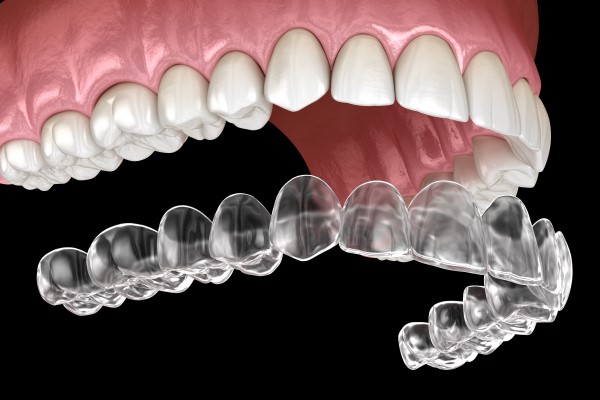
Clear aligner therapy represents a sophisticated approach to correcting the dental misalignments that contribute to chronic head pain. Unlike traditional orthodontic methods, these transparent devices work progressively to reposition teeth into their optimal positions, thereby restoring proper bite mechanics and reducing the muscular strain that triggers headaches.
The Biomechanics of Bite Correction
The process begins with a comprehensive assessment of how the upper and lower teeth meet when the jaw closes. Specialists examine the contact points, identify areas of excessive pressure, and map out the precise movements needed to achieve harmonious dental alignment. Through a series of custom-fabricated aligners, teeth are gradually shifted into positions that distribute bite forces evenly across all dental surfaces.
This methodical repositioning alleviates the compensatory muscle movements that have become habitual over years of malocclusion. As teeth move into their correct positions, the jaw no longer needs to shift awkwardly to find a comfortable resting position, and the chronic tension that has fuelled persistent headaches begins to dissipate.
Progressive Relief Through Gradual Adjustment
One of the distinct advantages of clear aligner treatment is its gradual nature, which allows the neuromuscular system to adapt alongside the dental changes. As each aligner in the sequence makes subtle adjustments to tooth position, the muscles of mastication and the temporomandibular joint gradually recalibrate to the improved alignment. This progressive adaptation often results in a corresponding reduction in headache frequency and intensity throughout the treatment course.
Patients frequently report noticing improvements in their headache symptoms within the first few months of treatment, well before the full orthodontic correction is complete. This early relief occurs as even minor improvements in bite alignment can significantly reduce the muscular strain that has been triggering pain signals.
The Role of Temporomandibular Joint Disorders
Many individuals experiencing chronic headaches also suffer from temporomandibular joint disorders, which are intimately connected to bite irregularities. When teeth do not fit together properly, the temporomandibular joint must accommodate the discrepancy, often leading to inflammation, clicking, and pain that radiates beyond the jaw itself.
Clear aligner therapy addresses these issues by establishing a stable, balanced bite that allows the temporomandibular joint to function within its natural range of motion. Studies have shown that malocclusion can be a primary factor in headache development, making orthodontic intervention a logical therapeutic approach for those whose headaches stem from dental causes.
Achieving Lasting Relief Through Proper Alignment
The journey towards headache relief through orthodontic correction requires patience and commitment, yet the results can be transformative. Those seeking Invisalign in Plymouth will find that modern clear aligner technology offers a discreet and comfortable path towards both improved dental aesthetics and functional bite correction.
The beauty of addressing headaches through orthodontic means lies in treating the underlying cause rather than merely managing symptoms. Once proper alignment is achieved and maintained through appropriate retention protocols, many patients experience lasting relief from the chronic headaches that have plagued them for years. The restoration of balanced bite mechanics creates a foundation for long-term comfort, allowing individuals to reclaim their daily lives from the grip of persistent head pain.
The Science Behind Why Some Teeth Stain More Easily Than Others

Understanding the Mystery of Tooth Discolouration
Many people notice their teeth gradually losing their natural brightness over time, but staining is not simply caused by poor oral hygiene. The structure of dental enamel, genetics, diet, and lifestyle habits all play a role in how susceptible teeth are to discolouration. Research shows that some people are naturally more prone to staining than others, even when following similar oral care routines.
Understanding these factors can help patients make better choices to protect their smile, which is why a private dentist in Manchester may recommend personalised advice and preventative treatments based on individual risk factors.
The Structure of Tooth Enamel and Its Role in Staining
The outermost layer of teeth, known as enamel, serves as the first line of defence against staining agents. This highly mineralised tissue is composed primarily of hydroxyapatite crystals, arranged in a complex prismatic structure. However, not all enamel is created equal. The density, thickness, and microscopic architecture of enamel vary considerably between individuals, and these variations play a crucial role in determining staining susceptibility.
Enamel porosity represents one of the most significant factors affecting stain resistance. At a microscopic level, enamel contains tiny spaces and irregularities between the crystalline structures. When these pores are larger or more numerous, chromogenic molecules from foods, beverages, and tobacco can more easily penetrate the enamel surface and become embedded within its structure. Conversely, denser enamel with smaller pores provides a more effective barrier against staining agents.
Genetic Factors That Influence Tooth Colour
Inherited Enamel Characteristics
Genetics play a substantial role in determining baseline tooth colour and staining susceptibility. The thickness and translucency of enamel are largely hereditary traits, passed down through families. Some individuals inherit naturally thinner enamel, which allows the yellowish dentine layer beneath to show through more prominently, creating an appearance of discolouration even without external staining factors.
Dentine Colour Variations
The dentine layer beneath the enamel also exhibits considerable variation in natural colour. This secondary tooth structure ranges from light grey to yellowish-brown, and its hue significantly influences the overall appearance of teeth. Individuals with darker dentine will naturally have teeth that appear less white, regardless of enamel condition. This genetic predisposition means that some people face an uphill battle in achieving the bright white smiles often portrayed in media, even with excellent oral hygiene practices.
Environmental and Lifestyle Factors
Beyond genetic predisposition, numerous environmental factors contribute to differential staining rates. Dietary habits represent the most obvious culprit, with substances such as coffee, tea, red wine, and berries containing powerful chromogens that adhere to enamel surfaces. The frequency and duration of exposure to these staining agents matter considerably. Those who sip coffee throughout the day expose their teeth to prolonged contact with chromogenic compounds, increasing staining risk compared to those who consume such beverages quickly.
Smoking and tobacco use accelerate tooth discolouration dramatically. The tar and nicotine in tobacco products create stubborn brown and yellow stains that penetrate enamel far more aggressively than food-based chromogens. Research into tooth staining mechanisms has demonstrated that tobacco-related discolouration often requires professional intervention to address effectively.
The Impact of Enamel Wear and Age
As teeth age, the enamel naturally thins through years of mechanical wear and chemical erosion. This gradual process exposes more of the underlying dentine, contributing to a yellower appearance. Additionally, microscopic cracks and surface irregularities accumulate over time, providing additional sites for stain molecules to lodge. Professional dental guidance emphasises that age-related changes in tooth structure make older individuals more susceptible to staining, regardless of their oral hygiene efforts.
Certain medications, particularly tetracycline antibiotics taken during tooth development, can cause intrinsic staining that affects the internal structure of teeth. These stains prove particularly resistant to conventional whitening treatments, highlighting the complexity of tooth discolouration.
Protecting Your Smile Through Professional Care
Understanding the science behind tooth staining empowers individuals to make informed decisions about their oral care. Whilst genetic factors remain beyond personal control, consulting a private dentist in Manchester can provide tailored strategies for minimising staining based on individual risk factors. Professional assessments can identify specific vulnerabilities in enamel structure and recommend appropriate preventive measures, from specialised cleaning techniques to protective treatments that strengthen enamel resistance to chromogenic substances.