








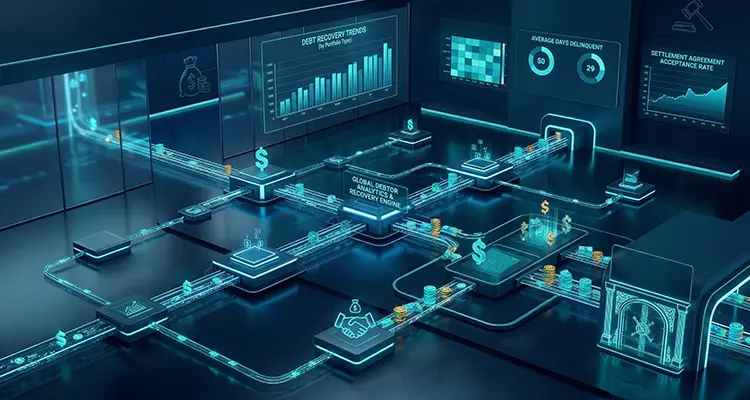
Unpaid invoices can cause significant stress to a business’s finances. In addition, late payments can make it hard to plan and budget for future expenses, which can severely hinder growth and development. The modern debt collection practices seek to help companies with the former by enabling them to organize and automate the recovery process while ensuring that they maintain accurate payment data at all times. This, in turn, makes it easier to keep track of delinquent accounts and even helps maintain a good relationship with customers.
Essential Features of Effective Collection Systems
A well-designed system would help relate billing to actual recovery of money. It is essential to choose the features that will support the company’s billing practices.
It should provide the following functions:
- Send reminders about the upcoming bills’ due dates;
- Update the information about the account balance after a bill is paid;
- Alert about the overdue according to the set terms;
- Track customer interaction to be able to update the information to make further steps;
- Generate reports about the outstanding amounts and the progress of recovery.
The software should not be overly automated and always rely on the judgments of humans, thus eliminating the need for people to step in and make changes. The staff needs to analyze particular situations and take action only when necessary.

Strengthening Communication Through Smart Tracking
Prompt correspondence assists clients in recognizing their unpaid liabilities. Through the use of programmed notifications, precise billing data can be delivered without necessitating that employees reach out to each individual account personally. Nevertheless, contemporary recovery strategies are most effective when firms merge consistent monitoring with courteous interaction. Dispatches ought to clarify the total owed, the final date for payment,modern debt collection and accessible methods for support. It is essential that consumers possess a simple mechanism for asking queries or flagging inaccuracies.
- Tailor alerts by utilizing confirmed account specifics and precise transaction data.
- Offer transparent directions for addressing billing disagreements or accounting blunders.
- Refer intricate situations to skilled personnel for thorough evaluation.
- Keep logs of all interactions to avoid sending redundant or contradictory notes.
Furthermore, companies must evaluate how often they send messages. Bombarding clients with too many notices might cause irritation without actually enhancing the likelihood of receiving funds.
Comparing Manual and Automated Collection Methods
Different approaches offer distinct benefits depending on business size and account volume. The following table highlights common differences between manual processes and automated systems.
| Activity | Manual approach | Automated approach |
| Payment reminders | Staff send messages individually | Scheduled messages follow defined rules |
| Balance updates | Employees enter payments manually | Connected records update after confirmation |
| Overdue account checks | Staff review spreadsheets regularly | Reports flag overdue invoices automatically |
| Progress reporting | Employees prepare reports periodically | Dashboards summarise available account information |
| Dispute management | Staff handle each case directly | Systems route cases for human review |
Automation can improve consistency across routine tasks. Human oversight remains important for disputes, exceptions, and sensitive customer discussions.
Frequently Asked Questions
- What Is Automated Debt Collection?It uses software to manage routine reminders, track payments, and organise overdue account information.
- Can Automation Improve Cash Flow?It can support timely payments by improving visibility and reducing delays in routine follow-up activities.
- Should Every Account Receive Automated Reminders? Disputed invoices and sensitive cases may require personal review before further communication.
- How Often Should Payment Records Be Checked?Businesses should reconcile records regularly and verify payments before sending additional reminders.
- Does Automation Remove the Need for Staff? Employees remain essential for resolving disputes, reviewing exceptions, and maintaining professional customer relationships.
Building Better Collection Habits
Dependable collection hinges on precise documentation, transparent protocols, and steady execution. Companies ought to start by evaluating their current invoicing methods. Subsequently, they may digitize appropriate operations while ensuring personnel remain accountable for intricate choices. Periodic efficiency assessments highlight deficiencies needing correction. Adopting a measured strategy promotes more stable fiscal health while maintaining confidence in client interactions.